
Borrow, Buy, or Budget?
Choosing the best way to obtain a book
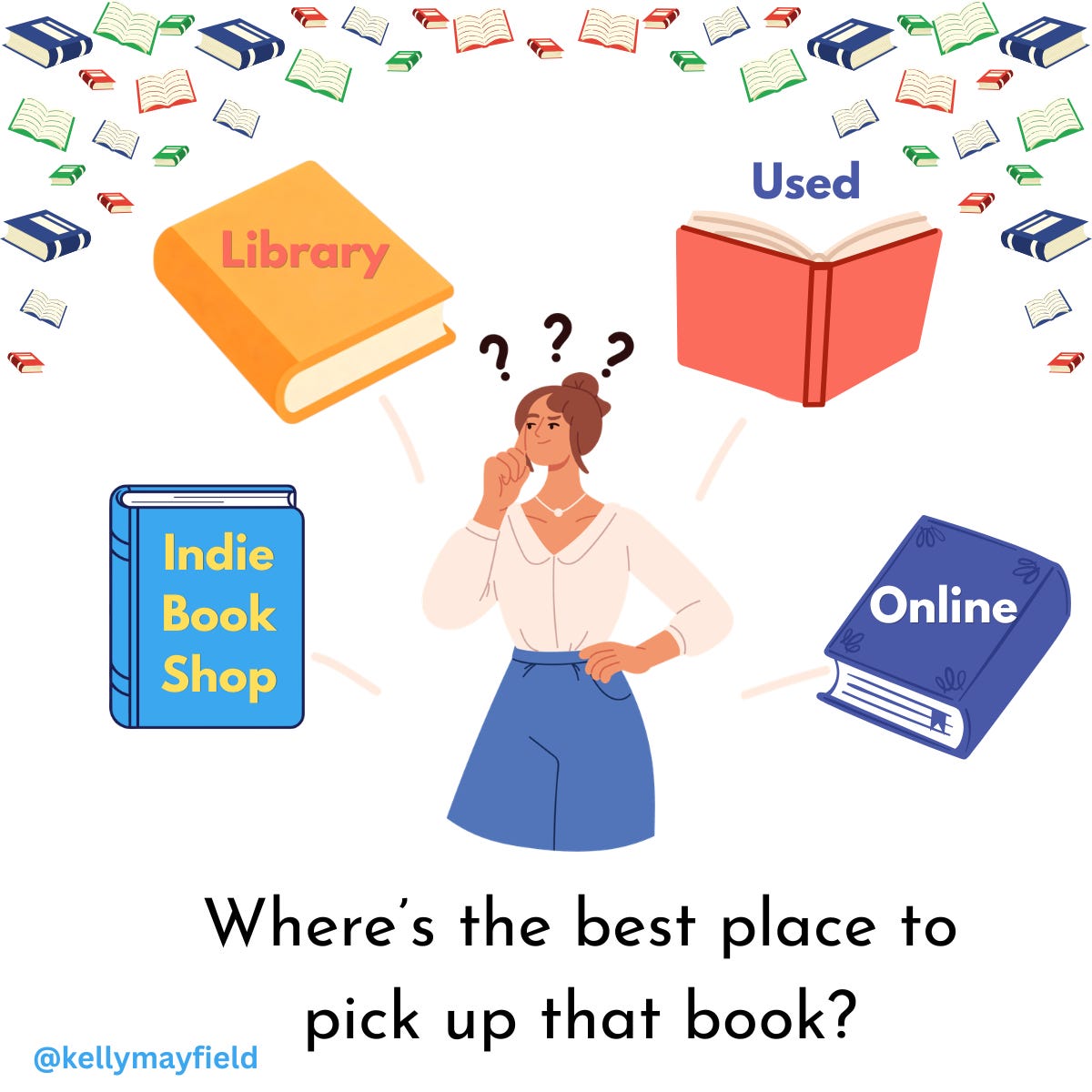
As readers, our most difficult decision should be which book to read next. But the best way to obtain that book can feel complicated. We’re bombarded with conflicting messages: Support your local library! Support bookstores—but not Amazon! Support authors!
And, of course, all of this supporting depends on our wallets. (Okay, maybe not supporting your local library). It would be lovely if we could all afford to purchase each book from an independent publisher at a local bookstore. It’s just not in the budget for most people.
I’m here to give you permission to get rid of the guilt. There is not a one-size-fits-all solution. In this post, I’ll discuss the pros and cons of your options for obtaining books.
FREE BOOKS!
From being approved for an advance reader copy (ARC), to Little Free Libraries, or even a friend who passes along a book they’ve already read, there are many opportunities to get a free copy of a book without a library card.
Pros: You can’t beat free!
Cons: This method relies heavily on serendipity. You shouldn’t count on it for picking up books at the top of your TBR.
Borrowing from your local library
A library card gives you access to all the books you want to read and more.
Pros: By borrowing books from your local public library you’re not only saving money but supporting it. Circulation numbers justify budgeted money and grants, so check out more than you can read. Requesting and reading books from independent presses or lesser known authors helps them to find new audiences.
Cons: Let’s face it, not all libraries are created equal. In a rural area, you might have to travel miles to reach the nearest library only to find it’s so underfunded that they only buy a handful of new books a year. Or, you might have a well-funded library but it takes forever to borrow a new release.
Buying new in store
You don’t need a well-funded public library or an independent bookstore to buy that book you want to read today.
Pros: No more being stranded in the library holds line. Plus, you’re supporting your local economy.
Cons: Most people are limited to national chains like Barnes and Noble or Half Price Books.
Buying new online
It might not be instant gratification but it’s close.
Pros: Discounts abound and there are far more choices, including microgenres, than can fit into a brick and mortar store. Amazon isn’t the only online option—Bookshop.org gives 80% of their profit to indie bookstores.
Cons: Independent bookstores can’t offer the deep discounts of major online retailers, causing many smaller bookstores to go out of business.
Budget: new at a discount
Buying from a retail store at a lower price.
Pros: If you live in an area without a brick and mortar bookstore, you can still buy bestsellers through retailers like Walmart or Target. Shop for overstock titles at discounters like Marshalls or Big Lots.
Cons: These options are limited to what’s popular or what didn’t sell. Many readers won’t be able to find the titles they’re looking for.
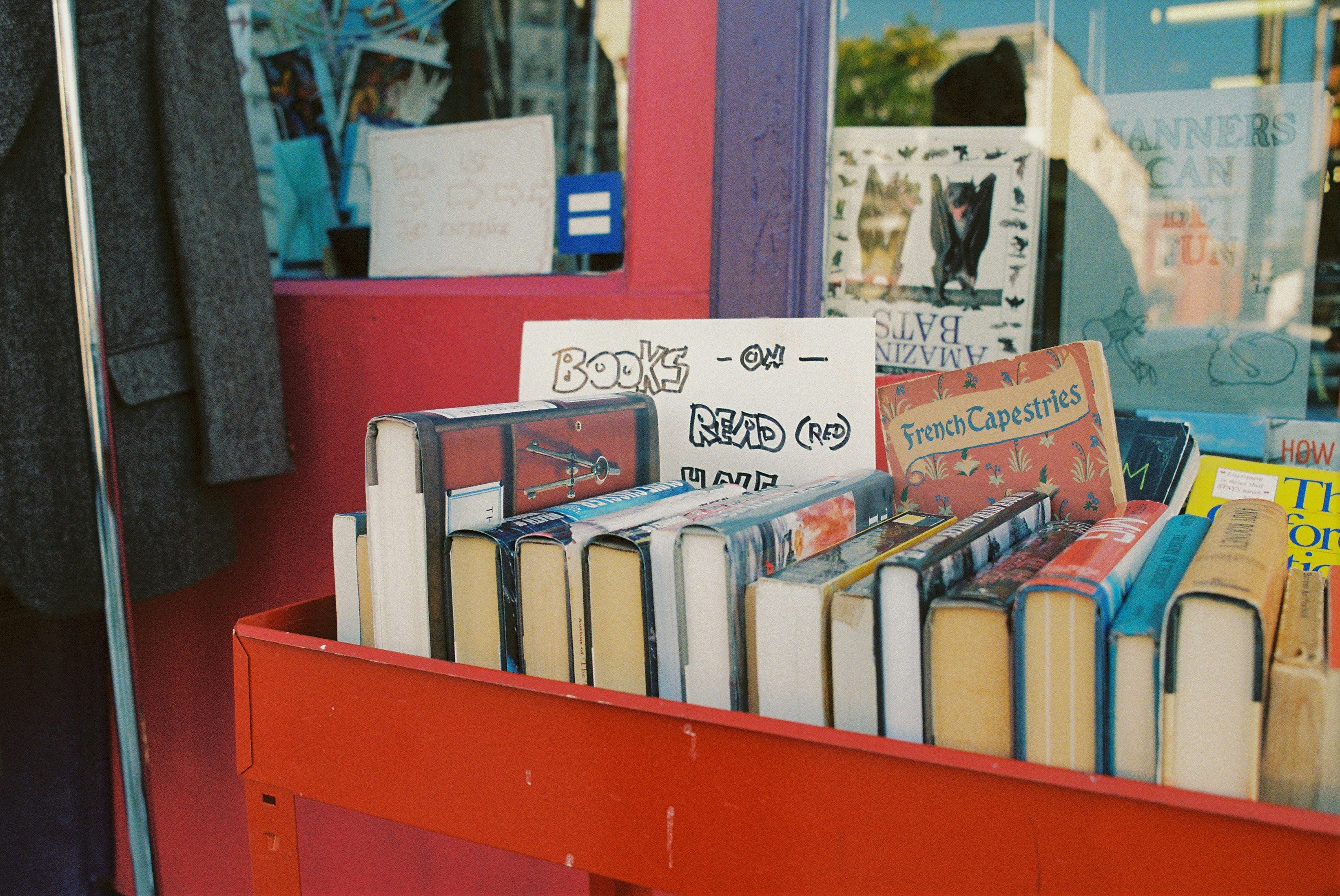
Budget: used bookstore
Supporting a local business and recycling.
Pros: Used books cost a fraction of the price of buying new. Used bookstores can sell anything, but many specialize in a specific genre (romance or sci-fi/fantasy) or only sell antique books. They tend to be independent, too, although you can find used books at thrift stores like Goodwill. Since prices are low, you might take a chance and find a new favorite author.
Cons: Only a fraction of bookstores buy and sell used books. Even if you have one near you, it may not stock the types of books you read. While shopping at a used book store helps your local economy, the publisher and author don’t receive any benefit after the initial purchase.
What’s best for you?
Both your location and your reading style will influence how you obtain a book. Here’s a fun look at a few types of readers.
Always Annotating
You never open a book without your trusty pencil case with highlighters, tabs, pencils, and pens at your side. It’s not reading if you can’t find where you left off by the absence of markings.
Congratulations, this librarian gives you permission to never borrow books from the library! (Please stop by for our other offerings.) You might enjoy picking up particularly nice editions of classics used to commemorate your thoughts. On the other hand, if you fly through the latest romantasy series, keep an eye out at your local retailer like Walmart or Target for discounted paperback copies.
Gotta Collect ‘em All
You’re a pretty average reader, picking up what’s popular along with backlist titles except for one thing—you have a prolific favorite author and must have their full bibliography at your fingertips.
Public libraries excel at what’s popular right now. However, you can’t count on them to keep a full collection of a single’s author’s work, no matter how popular. New titles are purchased in bulk, then culled as the demand dies down. Plus, there’s always attrition from lost or damaged books. If you want to be able to choose from every book written by Stephen King, Debbie Macomber, or James Patterson, you will need to purchase them.
Thrift stores like Goodwill are a great place to pick up the backlist titles of bestsellers. You can use the money you save to buy the new releases at an independent bookstore or bookshop.org.
The Selective Collector
You read a lot but a book has to be special to be added to your home library. It has to be a title you’ve already read and are still thinking about months later. Sometimes you will borrow a book you’ve been reminiscing about from the library. It’s always disappointing to discover a book you remember checking out five years ago is no longer there.
This type of reader is a heavy library user. Books that get a lot of buzz, book club selections, and titles you discover because of a shelf display are exactly what the library is there for. As explained above, these books don’t stay at the public library long term.
If you end up buying books after the hype has died down, an overstock retailer like Big Lots or the Friends of the Library sale at your local library is a great place for you to find titles. You will also enjoy the personally curated experience of shopping at an independent bookstore. You can afford to pay a little more for the few books you own because of how much you save by having the library be your first stop for books.
It’s easy to get into the habit of picking up books at the same location every time. It’s also tempting to use the higher cost as an excuse to not shop at an independent bookstore. If you expand your options, you can find the book you’re looking for while supporting a variety of book sellers (plus your local library).
Where is your favorite place to get books? Tell me in the comments. Or, tell me your reading style if you’d like recommendations.
When shelves got cluttered, I donated a bunch and had a “book in, book out“ policy. Now I borrow everything digitally, with the exception of poetry. I collected a bunch of library cards and rarely have to wait, usually less than a week.
Love this article. A few years ago I wrote about how I curate my personal library. You and I seem to collect books in similar ways. Here's my article: https://laurakbray.substack.com/p/a-home-library?utm_source=publication-search