
The Compound
I read it and want to chat

My number recently came up on the extensive wait list at my library for Aisling Rawle’s The Compound. Released in late June, The Compound was a pick for two major book clubs and became a summer hit. Based on the plot, I wasn’t expecting to connect with it but I ended up reading it in only two days and kept thinking about it afterwards.
The story is told from the perspective of Lily, a 20-something woman who is participating in a reality TV show. The book takes place from from the beginning of the season to the end. The contestants take part in group challenges to win items for the compound where they live. They also participate in individual challenges for personal items. They have no contact with the outside world. Initially, the contestants must find a member of the opposite sex to partner with or they will be eliminated. When they are down to the finalists, this requirement is removed. The last person left can request whatever material thing they want and live in the compound as long as they want. However, when they leave they can only take what they can carry.
Although the book has been promoted as Love Island meets Lord of the Flies, it reminded me strongly of Stephen King’s The Long Walk (1979). The premise of The Long Walk (*SPOILER ALERT*) is a competition where 100 teenage boys are chosen to walk as long as they can. If they drop below the speed of 4 mph longer than 2 minutes they are shot. Published before reality TV was a thing, we are told that the competition is not broadcast.
Both stories drop you into the competition without context. Part of what creates tension in the first few chapters of The Long Walk is that you (theoretically) don’t know what’s going to happen when someone “gets a ticket.” I think The Compound could have benefited from having a little more tension in that regard. Lily tends to explain the rules instead of letting us wonder.
Both stories drop hints that the competition takes place in a dystopian future but without describing the world in detail. The point of these stories isn’t the battle against an unjust government, it’s the competition. For The Long Walk, the dystopian background provides a reason for the competition to exist. The Compound doesn’t really need an explanation because it could plausibly exist in today’s world.
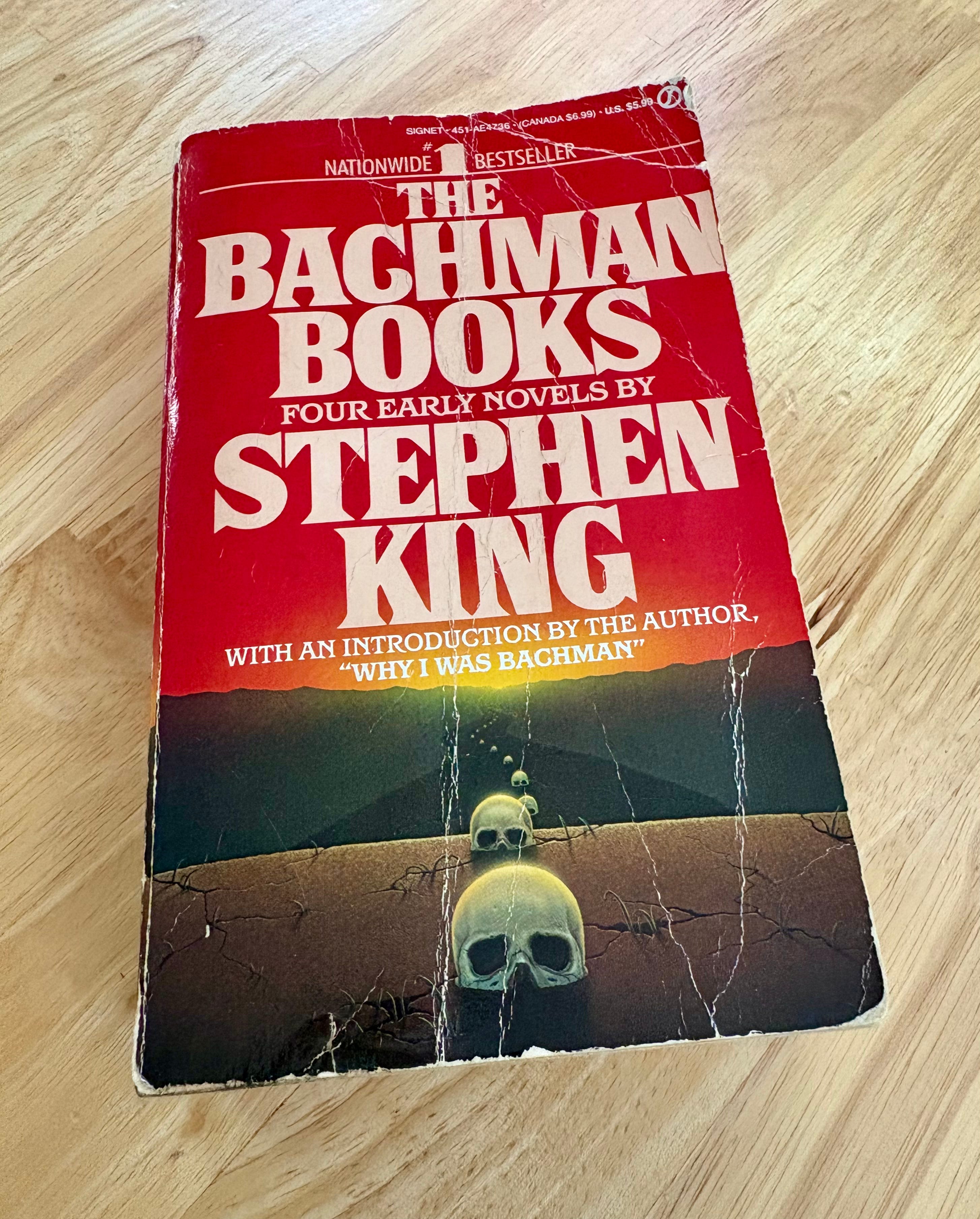
My vintage copy. Did you know The Running Man takes place in 2025?
In both stories, the protagonist doesn’t have a particular reason to have signed up to participate. All the participants in The Long Walk are teenage boys–no further explanation for why they would sign up is necessary. Or maybe that’s just me because I work at a high school and have more than one teenage son. In the story, a walker says a few hours in:
“I don’t think I ever realized the gut truth of what this is. I think I had the idea that when the first guy got so he couldn’t cut it anymore they’d aim the guns and him pull the triggers and little pieces of paper with the word BANG point on them would…and the Major would say April Fool and we’d all go home.”
Most participants at The Compound signed up out of boredom or the desire to own things that would be beyond their reach in the outside world. Lily tells us:
I felt, now that I was fully removed from it, that there was nothing for me back home, only the same drudgery, day after day. I didn’t know what might happen in the compound in the following weeks, but I knew that there would be opportunities for more. One simple, even fun task, and something new would appear.
As weeks go by in the compound, Lily will find that there is indeed drudgery to be had. It’s possible to get used to anything. The rise and fall in the motivation of the contestants is continually pointed out to us. Several contestants decide to leave simply because they decide the prizes aren’t worth staying for. They can’t endure the tedium and isolation.
The Long Walk is a physical endurance competition. The participants chat with each other to pass the time but there’s no strategy or benefit to doing so. In The Compound, relationships between participants are somewhat important. Because of the need for an opposite sex partner, the female contestants put a lot of effort into looking beautiful. The competition begins with one more person on the women’s side (For Reasons) but the women never seem to gain the upper hand even when the numbers equalize. At times the group will be asked to choose a person to be eliminated and they pick based on who is the most enjoyable to spend time with. Most of their time is spent laying around the pool, drinking alcohol, or making small talk with each other.
Lily will remind us that keeping the producers and audience entertained is what is most important. The individual challenges they are given sometimes create drama within the group. Women seem to be given the most embarrassing challenges, such as swimming naked or defecating in public. When the show has progressed far enough that they are competing as individuals, the contestants are given challenges that favor the strengths of the men and at times, violence between contestants occurs. Lily wonders if the producers want a man to win or if these things reflect what the audience wants. The male/female dynamics play a big part in the novel.
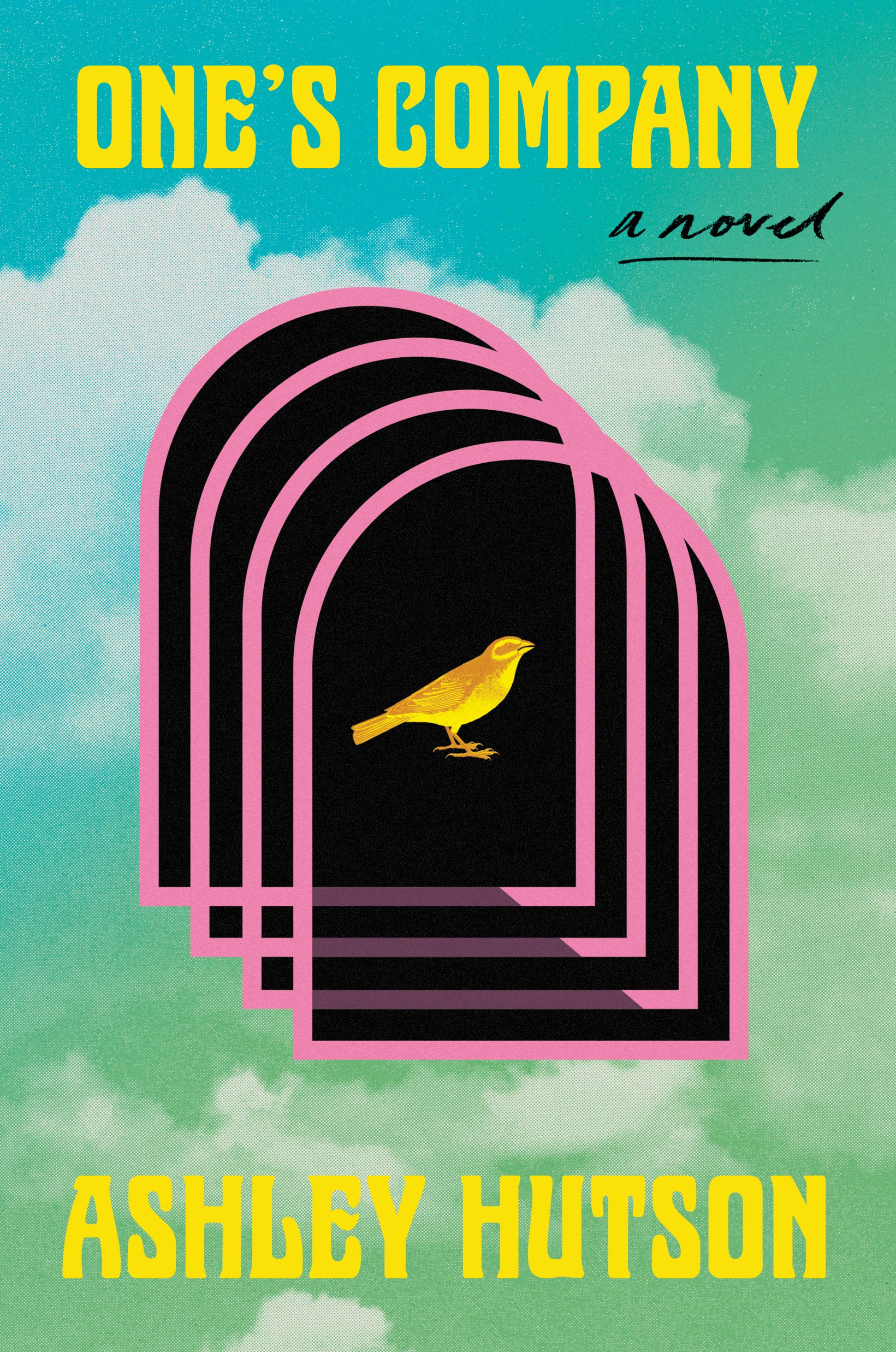
The other story I was reminded of was Ashley Hutson’s One’s Company (2022). Bear with me on this one. So, One’s Company is about a woman who survives a traumatic experience that causes her to withdraw from everyone. Isolated, Bonnie becomes obsessed with watching the 1970’s TV show Three’s Company. When she wins the lottery, she uses the money to buy a remote mountaintop property, where she has life-sized reproductions of the Three’s Company set built. (We might even call it a compound since there are multiple buildings in Bonnie’s sanctuary).
“My escape would be real and total, fully lived and experienced by me, a lone human…I would live inside the show…I would bury myself in it. I would figure out everything I needed to survive, alone, and then I could dismiss every other person on earth, living and dead, with one triumphant wave goodbye.”
Things go as planned for several years before she’s interrupted, but we’ll stop there.
The similarity between Lily and Bonnie is that both want to live alone. While Lily doesn’t have trauma in her past like Bonnie, we do learn that she’s not deeply connected to anyone. She has only a superficial relationship with her mother. She doesn’t have a challenging or meaningful job. After assessing her life she’s made the decision that she would be more comfortable living alone in the compound forever in material comfort. Garraty, the protagonist of The Long Walk, is not isolated but again, he’s a teenage boy who thinks he’s invincible so he doesn’t have any deep motivation.
I think there are more similarities between The Compound and The Long Walk. It’s probably just me who would be reminded of One’s Company. But let me know—if you read The Compound tell me what you thought!
I appreciate the comparisons to other novels. Very insightful. I might check out One’s Company!