
Something New #1: Exploring Graphic Nonfiction
A format for brushing up on history, with title suggestions for MLK Day
New Year’s is only a couple weeks behind us and I’m still seeing a lot of discussion about reading goals. It seems like many people are wanting to leave goals related to reading a certain number of books behind in favor of a slower, more intentional, reading pace that includes exploring books beyond the usual favorites. This seems like the perfect starting point for a series where I profile different genres and formats of books you may not have tried yet.
I mentioned in one of my earliest posts that my biggest change since becoming a librarian is that I’m far less judgmental about what people read. Graphic novels are one of those genres that I used to think was total fluff. It’s okay for kids to read now and then but doesn’t really count as reading and it absolutely wasn’t a genre for adults. I will now try to atone for my misguided previous self by using the rest of this post to tell you why you, an adult who loves to read long books, should celebrate Martin Luther King Day by dipping your toes into the graphic nonfiction genre.
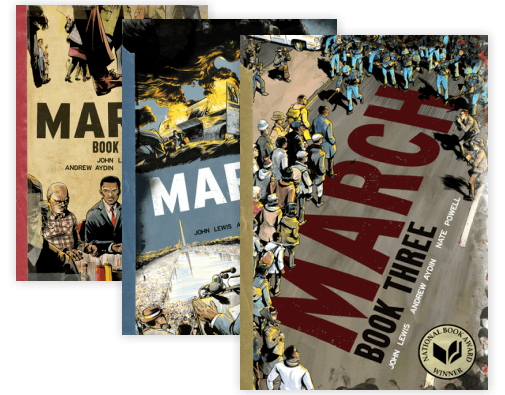
I’ve seen many kids who don’t like to read and aren’t very interested in school really connect with this format. Here are some reasons why I now consider them a useful academic tool:
They are quick to read and easy to understand.
The format of graphic nonfiction gives information in two forms, words and images, which increases comprehension and retention.
The images in historical graphic nonfiction give the information an aspect of realism. This is one reason why books like Maus are contested—images are by their nature more graphic than words.
In graphic nonfiction, the personal experience isn’t relegated to a text box alongside the narrative. The personal experience is the narrative. This increases empathy and helps you to understand the nuances involved.
By learning the basics in this visual format, the students are better prepared to understand the higher level information in class. For example, reading a graphic novel form of Beowulf makes them familiar with the names and general plot. Having that knowledge makes it easier to decipher the actual text in English class.
Okay Kelly, these do sound useful for school kids. But why should I pick one up?
Social media is awash in quick bits of history, some AI generated and some not. Have you ever clicked on a photo and read the compelling story behind it? Learned about a person that wasn’t included in your history class but it turns out had a significant impact? Picking up graphic nonfiction is simply taking that a step further. Instead of relying on algorithmic serendipity you’re making the conscious decision to support artists and writers while increasing your understanding of history.
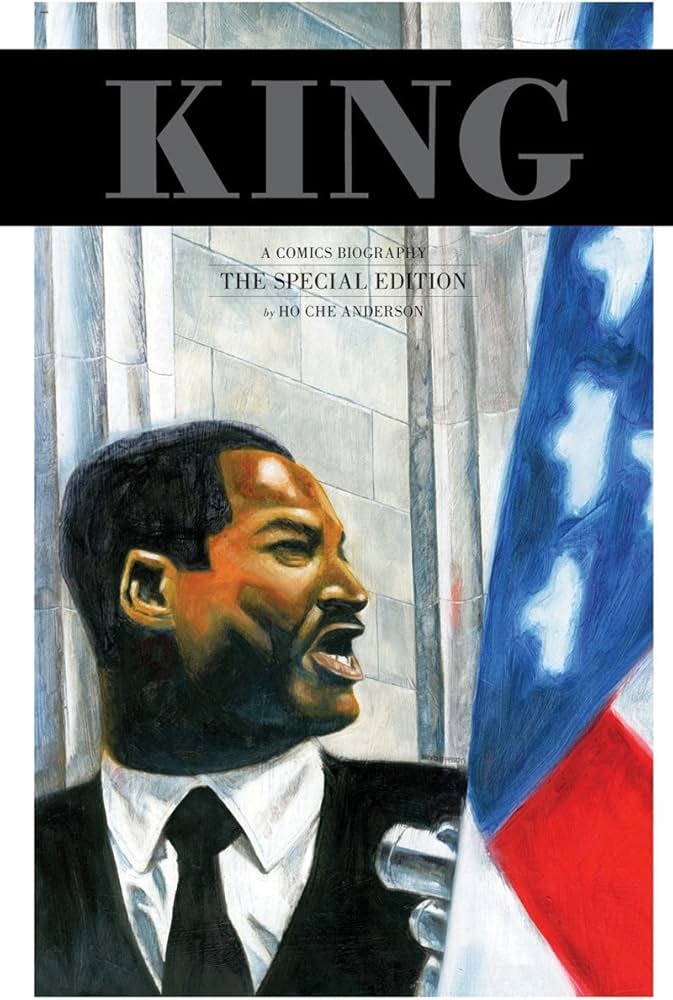
Since I’m using Martin Luther King Day as the jumping off point for this post, I’ll start with my recommendation if you want to learn more about his life. I’m sure you’re aware that comics have a long history and are considered an art form in their own right. In the 1990s, Ho Che Anderson created a biographical comics series about Martin Luther King, Jr. While there are now a variety of graphic biographies of MLK available now, you might consider beginning with this groundbreaking original which has been compiled into a one volume bound copy.
The three volume March series (image at the top of the page) created by Andrew Aydin and Nate Powell brings John Lewis’s recollection of his life and work in civil rights to life. Published from 2014-2016, this series won all the awards. It’s success is partially responsible for establishing graphic nonfiction as a marketable genre.
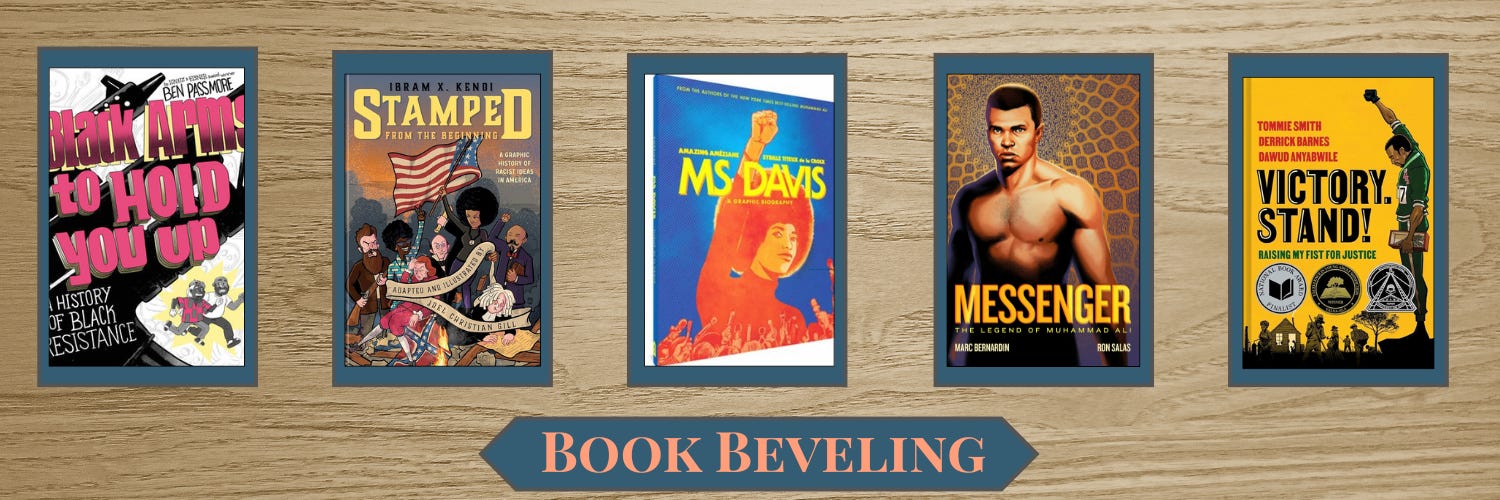
There are now graphic nonfiction books related to civil rights and Black history being published every year. Here are five you should consider picking up:
Victory. Stand! by Derrick Barnes and Dawud Anyabwile (2022) focuses on Tommie Smith’s iconic Black Power salute at the 1968 Olympics.
Messenger by Marc Bernardin and Ron Salas (2023) is a biography of Muhammad Ali.
Originally published in French in 2020, Ms. Davis by Sybille Titeux de la Croix and Amazing Améziane (2023) is a biography of political activist and philosopher Angela Davis.
Stamped: From the beginning (2023) is a graphic nonfiction adaptation by Joel Christian Gill of Ibram X. Kendi’s history of racist ideas.
Black Arms to Hold You by Ben Passmore (2025) which imparts over a century of Black militant history.
Librarian Pro Tip — You don’t have to leave your home and wander through the library trying to figure out which section these books are in. Check out the electronic version from your library, downloading it directly to your e-reader or tablet. A nice bonus is that you can zoom in to admire the finer details of the artwork.
You obviously know my thoughts on graphic novels/comics already, but I’m going to check out King this evening now.
I read a graphic novel (fiction) for the first time last year, and it was deviation from the norm for me. Very excited to look for some nonfiction ones. Thanks for the rec!