
Reading Outside My Lane
How I realized I was not a diverse reader and what I did about it
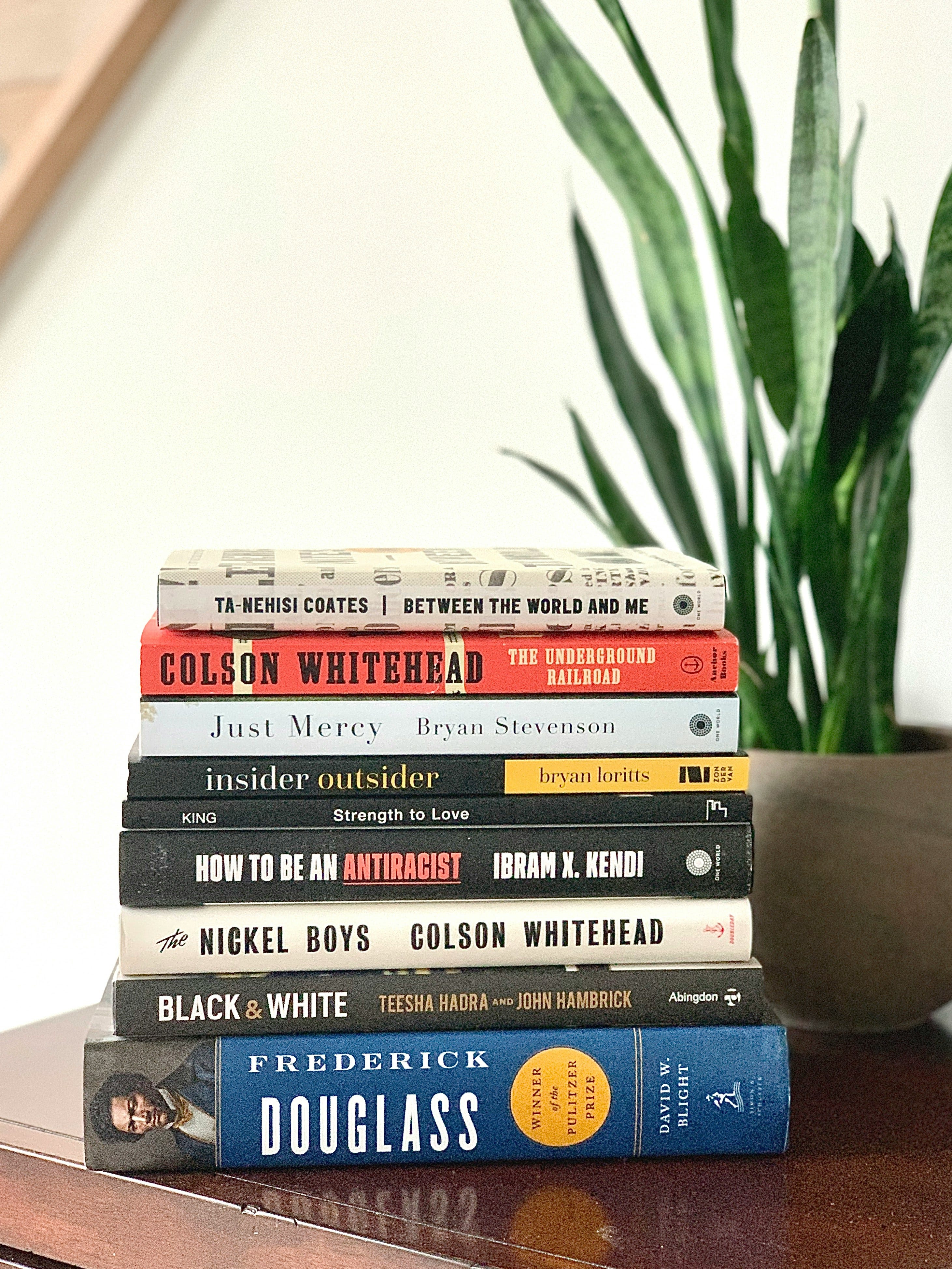
Photo by Tim Wildsmith on Unsplash
My husband and I recently visited a Black history museum. This motivated me to circle back to something I mentioned in my introductory post. In my first year as a school librarian, I noticed it was rare for students to check out a book by a Black author even if I tried to create interest through interesting displays. The school was mostly white, but even the non-white students didn’t check any out, probably because they didn’t want to look different.
I wondered why the white students didn’t try them out. Then I asked myself how many books by Black authors I’d read. I’m embarrassed to admit that I couldn’t come up with even five books.
I think I had the idea that books by Black authors were for other people. I probably would have said it was nice that they’re available, an improvement over the days when only white authors were published. If asked, I might have agreed that books by white authors are for everyone but books by Black authors wouldn’t be relatable to everyone. (This is the textbook definition of white privilege, by the way. It’s not people giving you free stuff because you’re white. It’s having a culture built around white people being the default “normal” human.)
In the online writing community, I learned marginalized authors commonly receive rejections from white literary agents or editors at publishing companies, saying the characters weren’t relatable or that they “just couldn’t connect.” In Black Boy Smile, D. Watkins wrote about his experience as the only Black person in his MFA program. I don’t have the book with me to look up the quote, but I particularly remember that he said none of his peers knew what to say about his stories of street violence and dealing drugs because it was so outside of their experience. But Harry Potter, he said, they could go on about Harry Potter for days. He wondered how a 12 year-old wizard was more relatable than his actual life.
What great context. Books are a place where you can walk through the back of a wardrobe and end up in a different world. They don’t have to be an exact copy of our lives. They’re more entertaining if they’re not. It’s a type of freedom, really. A book isn’t an exclusive event that you can only attend with an invitation. Instead, it’s like a festival where you can wander around, admiring how many different types of food, vendors, and musicians are available. You can sit down and enjoy any story that is being told.
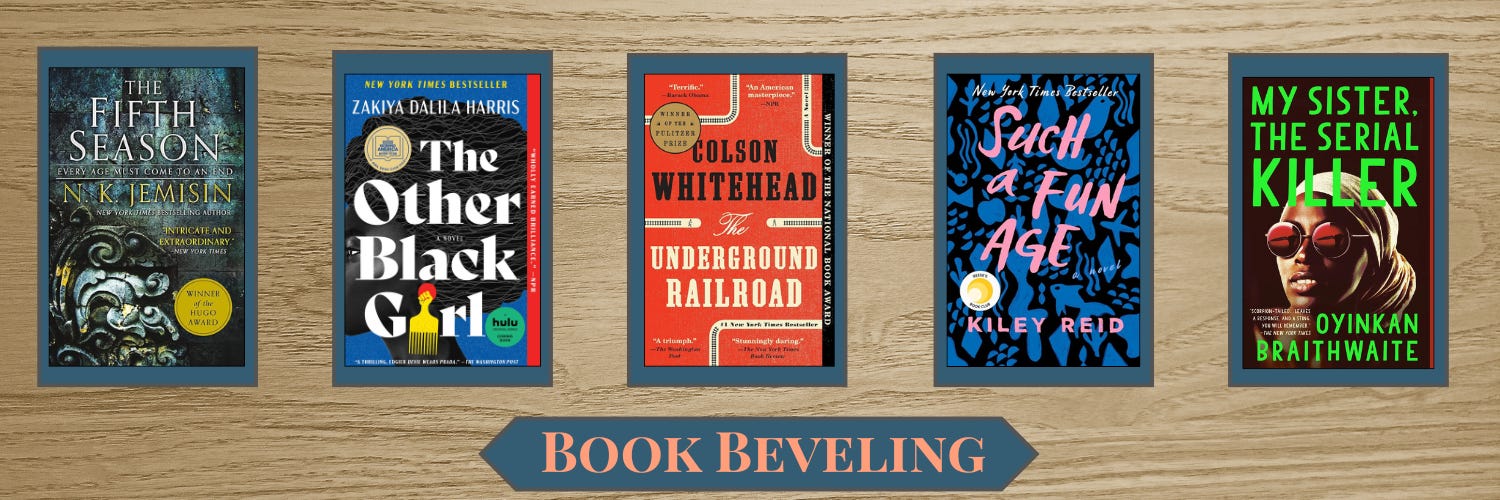
After that first year in the library, I spent my summer reading books by Black authors and still keep them in the mix. Award-winning books, books that keep showing up on agents’ MSWL lists, and books that catch my eye at the public library. I read them without asking who the audience is supposed to be and enjoy the good writing. I want to share a few of my favorites.
Such a Fun Age by Kiley Reid (2019). This book showed up on practically every agent MSWL, usually preceded by “...and if you have anything that could possibly comp to Such a Fun Age, send it my way.” It does truly feel that unique. The catalyst of the story occurs when Emira, taking a nannying gig while trying to decide what to do with her life, gets accused of having kidnapped the white toddler she’s babysitting. Emira later begins dating a white man who filmed the encounter with his phone. He turns out to have a complicated history with her employer. I loved the irony that both the boyfriend and the female employer are far more consumed with race than Emira. Also, while we initially label the boyfriend as Woke and the female employer as, I dunno, cluelessly racist?, as Reid gradually reveals more of their backstory, it no longer seems clearcut. I couldn’t put it down.
My Sister, the Serial Killer by Oyinkan Braithwaite (2018). I mean, that’s the whole premise right there. It’s not a secret who the murderer is. This story is really about the relationship between two sisters. Ayoola is beautiful and everything happens for her so easily. Korede is plain and her hard work is unappreciated, but she dutifully cleans up after her sister out of family loyalty. But when Ayoola sets her sights on the man Korede loves, who will Korede choose? It’s Jacob Have I Loved for grown-ups, if Caroline was a serial killer.
The Underground Railroad by Colson Whitehead (2016). This book won ALL the awards but I find it difficult to describe. The main character is Cora, enslaved on a plantation in Georgia, whose life becomes more difficult after her mother runs away. Cora eventually runs away too and is helped by the underground railroad. In this alternate history the underground railroad is an actual train that runs underground. Through this device and other POV characters, life in different states of this version of America is explored. One aspect of the story I really enjoyed was the Monty Hall problem-esque dilemma that Cora faces at each stop–should she stay with the known evils of her current location or take her chances that life might improve by switching.
The Other Black Girl by Zakiya Dalila Harris (2021). This is the one book on my list that I think could make white readers uncomfortable because it puts contemporary racism front and center. Nella, the main character, is the only Black employee at a publishing company just as Harris was when she worked in publishing. I knew abstractly about things like code-switching and microaggressions but it was another to read through everything Nella has to juggle every single day. She’s Black, but she can’t be too Black. They want her opinion but she can’t be too honest. When another Black woman is hired, Nella is initially excited. However, the new woman is a pro at meeting white expectations and loses no time before trying to isolate Nella. From there, the book turns into heavily satirical horror.
The Fifth Season by N.K. Jemison (2016). This first book of the Broken Earth trilogy made N.K. Jemison only the second Black woman to win a Hugo. But the second and third volumes also won Hugos, making her the first author to win for each book in a series. Jemison has created an amazing world for her series, but I’m sure it’s her unique use of POV that earned her awards. There are three female POV characters, each in a completely different situation. One is written in second person. I don’t think I could last through an entire book written in second person (I didn’t even try to pick up Harrow the Ninth) but it worked for me here. Jemison pulled off the kind of twist that made me immediately flip to the beginning again.
Christmas: Not just for white people and cute animals

(Note: This post focuses on Christian and secular Christmas books. I don’t want to tack on Hanukkah simply because it occurs around the same time as Christmas. Please do surround your children with books about the holidays of other religions and cultures.)
Something New #1: Exploring Graphic Nonfiction

New Year’s is only a couple weeks behind us and I’m still seeing a lot of discussion about reading goals. It seems like many people are wanting to leave goals related to reading a certain number of books behind in favor of a slower, more intentional, reading pace that includes exploring books beyond the usual favorites. This seems like the perfect start…
Purple Hibiscus read along

Welcome to Book Beveling’s first read-along! It begins today and runs through April 1st. I read Purple Hibiscus for the first time last year when I was trying to add a few diverse options for the British Literature paper at my high school. I was blown away and wished I had someone to discuss it with. I wanted to read it again this year and thought it wa…
My favorite Toni Morrison novel is The Song of Solomon!😊